

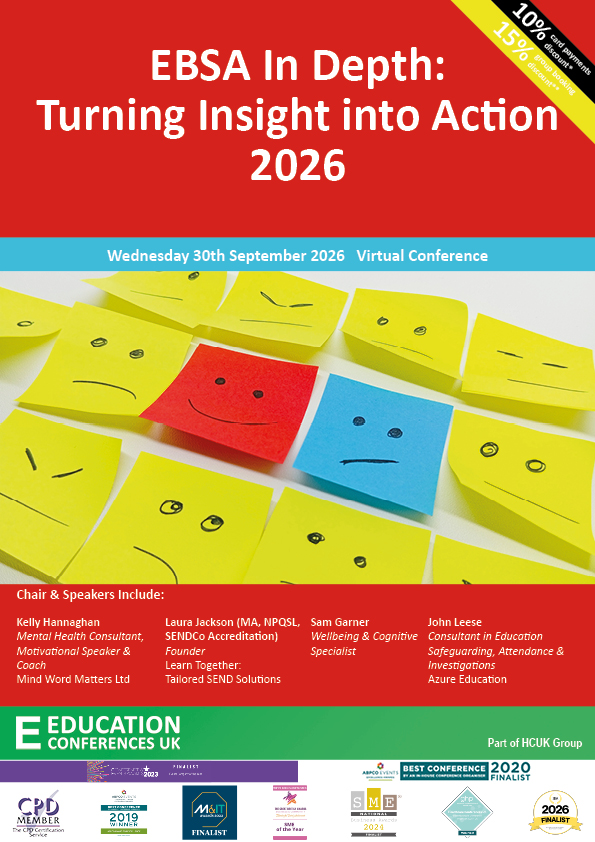
Emotionally Based School Avoidance is one of the most complex challenges facing schools today, with rising numbers of pupils experiencing deep-rooted anxiety, sensory overwhelm, relational distress, and systemic pressures that keep them from engaging with education.
This advanced one-day conference is designed for practitioners who already have foundational knowledge and are ready to take a deeper dive into the underlying mechanisms of EBSA.
Led by experienced specialists, the event brings together cutting-edge insights on neurodiversity, anxiety cycles, attachment and trauma, school culture, family dynamics, and multi-agency practice.
Through a blend of keynote input, case studies, practical tools, and interactive discussion, delegates will gain the confidence and clarity needed to support even the most entrenched cases.
Participants will leave equipped with evidence informed approaches to environmental adjustments, co-regulation, graduated exposure, parent collaboration, and sustainable reintegration planning.
Whether you are a school leader, SENCO, ELSA, educational psychologist, attendance officer, or part of a wider support service, this conference will strengthen your ability to respond compassionately, collaboratively, and effectively to EBSA.
Join us to deepen your expertise, broaden your toolkit, and drive meaningful change for the pupils and families who need it most.
By the end of the conference, you will be able to:
Understand the key neurodiversity-related factors that contribute to EBSA.
Apply practical sensory and environmental assessments within your setting.
Adapt classroom routines and expectations to reduce overwhelm and increase emotional safety.
Recognise the mechanisms of anxiety, safety behaviours, and avoidance cycles, and understand how these maintain non-attendance.
Use functional behavioural analysis to identify triggers, maintaining factors, and opportunities for micro-exposures.
Gain confidence in supporting parents, including reducing unintentional reinforcement of avoidance and strengthening home-school collaboration.
Understand the role of relational trauma and attachment needs in EBSA.
Identify school-level and systemic pressures that act as push factors and design flexible, EBSA-informed adjustments at whole-school level.
Strengthen your ability to assess family and contextual factors that contribute to EBSA.
Design or contribute to sustainable reintegration plans, using trauma-aware, multi-agency approaches.
Improve confidence in navigating legal and statutory responsibilities while keeping pupil wellbeing at the centre of decision-making.